
Last year, our team surveyed 203 technology leaders to understand how they approach software development – do they build in-house or work with external partners?
79% said they outsource development. But satisfaction remains low. As a full-cycle development partner that works with DACH enterprises, we wanted to understand why. What goes wrong when companies outsource? What makes the best partnerships?
In this article, we share 6 common concerns tech leaders raised in our survey. We turned them into criteria you can use to choose a full-cycle software development partner – the one who takes responsibility for your product.
First, let’s see what data tells us about how companies approach outsourcing.
Many software projects that rely on outsourcing end with missed expectations, and our survey confirmed it. Nearly 8 in 10 companies outsource development, yet respondents highlighted six common concerns that make outsourcing harder than it should be (we talk about them in the next section).
Outsourcing itself isn’t the problem. It’s how it’s done. When vendors act as “check-the-box” executors, no one takes full responsibility for how the product performs. That’s why more companies are rethinking traditional outsourcing, preferring outcome-based partnerships instead.
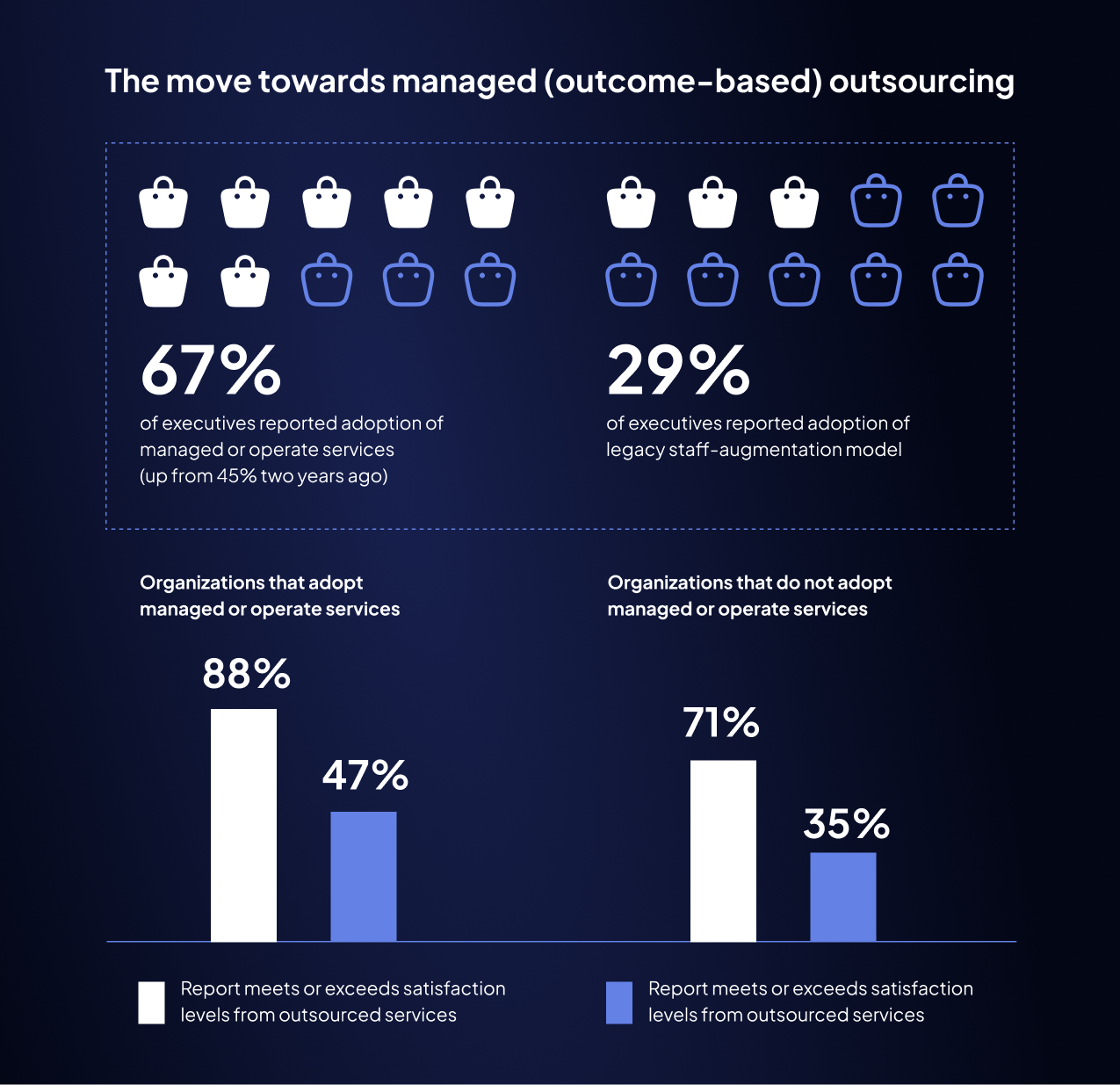
That shift is happening globally, Deloitte’s 2024 Global Outsourcing Survey confirms: 67% of executives already moved from staff augmentation to “outcome-based” or managed outsourcing (this is what we at Modeso call full-cycle development). That’s up from 45% just two years ago.
Full-cycle development is still outsourcing, but with shared accountability. One tech partner is responsible for the entire process, from planning and design to development, launch, and maintenance. Companies using this model report higher satisfaction (88%) than those relying on traditional staff augmentation (71%).
At Modeso, we see the same shift across the DACH region. Enterprises no longer want extra hands; they want accountability from a partner who owns both the process and outcome.
But what goes wrong in most outsourcing relationships, to begin with?
Our survey of 203 tech leaders revealed six recurring concerns. Each one tells you a lot about how to recognize a true full-cycle development partner.
6 things to consider when choosing a tech partner (based on Modeso’s data)
In our survey, respondents highlighted several recurring challenges they face when outsourcing:
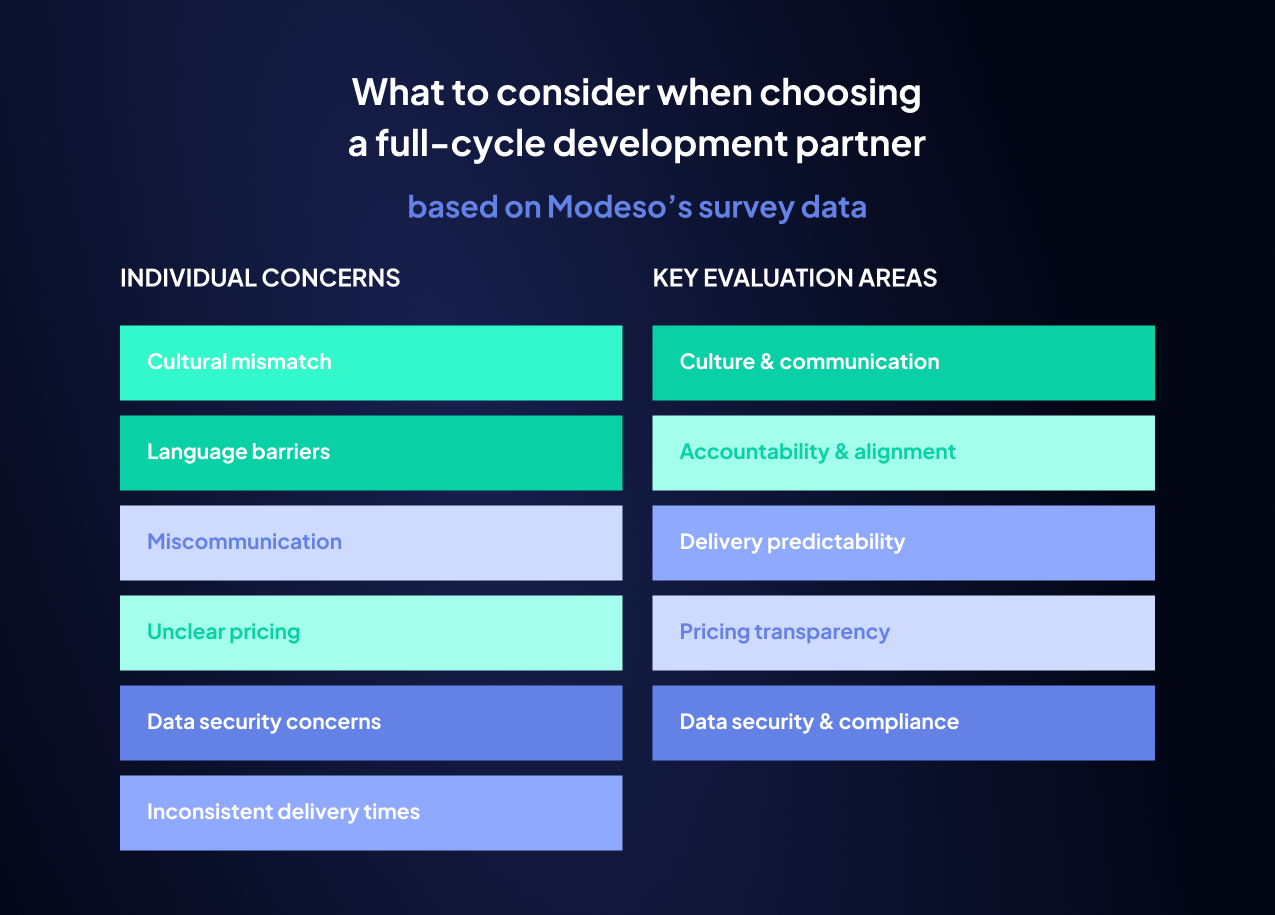
These concerns cluster into a few clear themes. Based on that, we worked out a list of things for you to consider when choosing a full-cycle software development partner.
According to Deloitte, 38% of companies brought work back in-house. Working with teams who didn’t share their communication and cultural habits was too difficult for them. It’s a reminder that collaboration problems don't only come from product quality, but from mismatched ways of working, when even small misunderstandings can turn into real problems. A team might interpret “urgent” differently, hesitate to challenge a client’s decision, or skip context because “the brief was clear.”
Example from Modeso: being based in Switzerland naturally shapes how we work. Our product owners — and most of our clients — are in the DACH region (Germany, Switzerland, Austria). Sharing the same business culture, time zone, and communication habits makes our collaboration faster and more effective.
What to look for in a tech partner:
What to ask on a first call:
A full-cycle partner stays responsible for whether the product works and creates value. That’s what most outsourcing setups miss. Too often, the client manages goals, while the vendor delivers tasks, and no one owns the result.
Example from Modeso: A project for Albin Kistler AG, a Swiss investment firm managing over CHF 14 billion in assets. We rebuilt their in-house algorithm into a full investment-analytics platform used by their portfolio managers every day. The platform directly supports investment decisions, so we stayed on to maintain performance, fine-tune data accuracy, and extend analytical features as their needs evolved. That ongoing collaboration keeps the tool reliable and valuable for Albin Kistler’s business.
What to look for in a tech partner:
What to ask on a first call:
A full-cycle partner stays accountable from planning through post-launch, aligning with you at every step. Still, many companies struggle to get that level of ownership. Per the same Deloitte report, tracking whether vendor work delivers expected results is the main challenge for 55% companies.
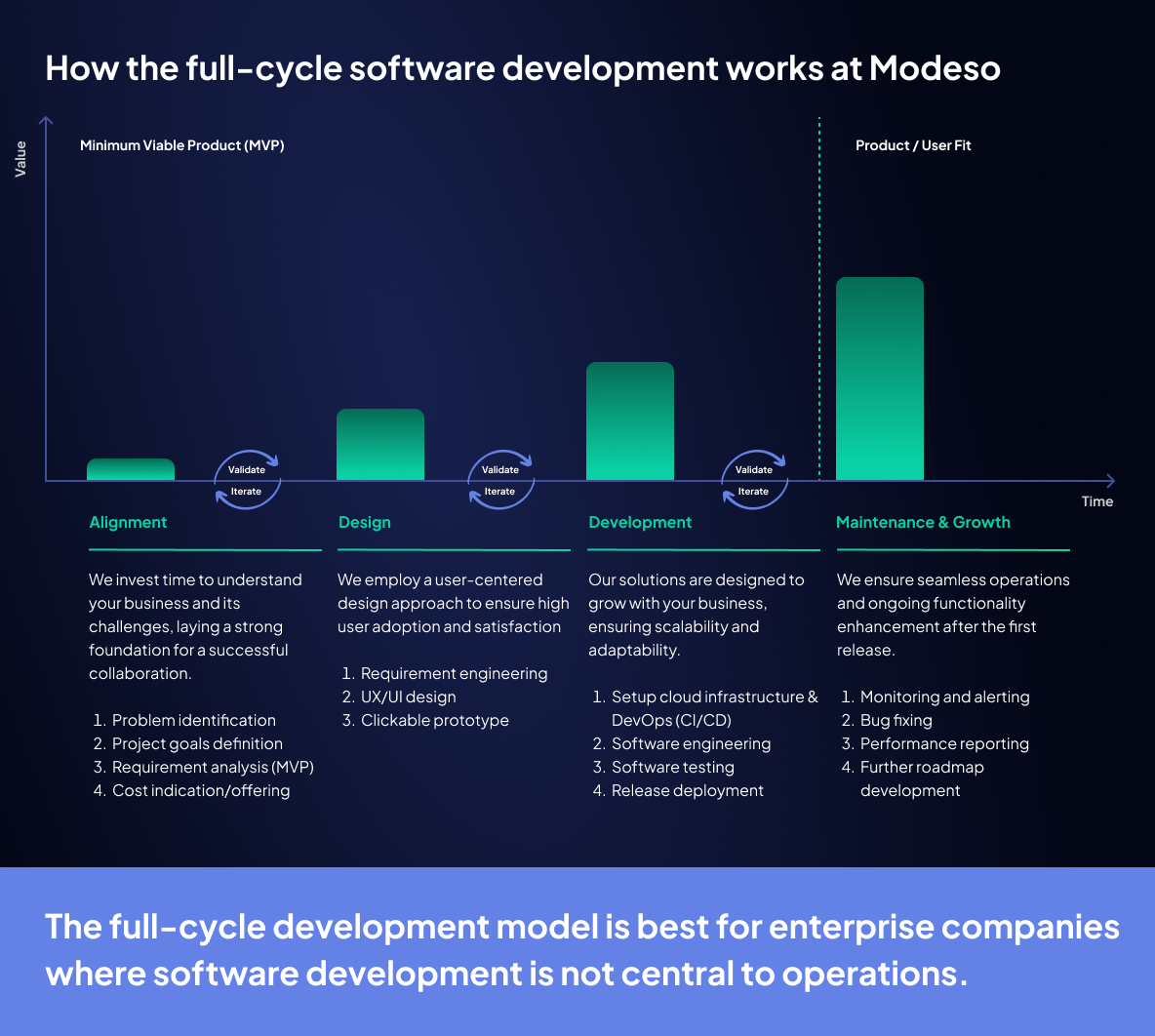
Example from Modeso: We use Agile sprints and a Lean mindset to keep our team focused on client’s outcomes. For instance, when working with Visana, one of Switzerland’s leading health insurance providers, we built a mobile-first referral-program MVP in just 2 months. The goal was to test a new customer-acquisition channel quickly, without waiting for full backend integration. So we:
The MVP proved the concept worked and laid the foundation for scaling later, which we also took on.
What to look for in a tech partner:
What to ask on a first call:
Cost still matters, but transparency and predictability matter more. The cost-first mindset is fading: companies now prioritize service quality and alignment over short-term savings. Only 34% of organizations list cost reduction as their main reason for outsourcing, down from 70% four years ago. Tech leaders choose transparency over “cheap.”
Example from Modeso: We combine Swiss product management with cost-effective development hubs in Egypt. Product ownership, governance and client communication stay in Switzerland, while delivery, QA and DevOps run from our Egypt hubs. This split lets clients in the DACH region benefit from senior oversight and transparent costs at the same time.
What to look for in a tech partner:
What to ask on a first call:
For regulated industries like finance or healthcare, outsourcing often stops at the legal department. The risk feels too high. Data shows that 46% of companies re-insource work to tighten security and compliance controls, one of the top drivers behind reshoring worldwide. So companies choose to work with partners who can meet local compliance standards (GDPR, FINMA, HIPAA) and guarantee where your data lives.
Example from Modeso: Most of the companies we work with operate in highly regulated industries: finance (Albin Kistler, TWINT), healthcare (Visana), auditing (Rietmann & Partner). All our client data stays within DACH borders, under Swiss regulatory and security standards. Product ownership and governance stay in Zurich, which keeps all GDPR and Swiss data-protection requirements in check. Our development hubs in Egypt follow the same security processes for access control, documentation, and environment management.
What to look for in a tech partner:
What to ask on a first call:
To recap, when evaluating tech partners, use these questions as your quick filter. If a vendor can answer most of them with clear examples, you’re likely talking to a true full-cycle team.
And if Modeso sounds like a full-cycle development partner you’re open to work with, just drop us a line, and we’ll prepare a project feasibility study so you know exactly what’s what it’ll take.

Datenschutz ist uns wichtig, daher haben Sie die Möglichkeit, bestimmte Speicherarten zu deaktivieren, die für das grundlegende Funktionieren der Website möglicherweise nicht erforderlich sind. Das Blockieren von Kategorien kann sich auf Ihre Erfahrung auf der Website auswirken. Mehr Informationen


