Business
10 min read

7 Challenges of Full-Cycle Development in FinTech Founders Have to Know

More than half of finance companies outsource their software development projects. Why is outsourcing in fintech so popular and is it worth trying? In this article, we analyzed trends in fintech outsourcing on the example of Swiss companies, broke down outsourcing costs, and identified the key factors for choosing the right tech partner.
Written by
Samuel Schmid
Published on
December 3, 2025
Read time
10 min read

Over half of the finance companies outsource fintech software development. Yet here’s what many founders tend to overlook: outsourcing in fintech is nothing like outsourcing a typical SaaS or mobile app.

As an outcome, many fintech outsourcing projects fail.

All because fintech development is fundamentally different. In fintech, every product must keep up with compliance requirements, financial logic, risk, and security. That means higher complexity from day one, and it’s the reason why classic outsourcing often falls short.

So founders are turning to full-cycle fintech development instead. This gives more security, compliance from the onset, and a partner who’s devoted to your project (if you’ve found the right one, of course). But full-cycle development comes with its own challenges that founders need to understand before they begin.

At Modeso, we’ve delivered 90+ fintech and finance-adjacent products for Swiss institutions, scaleups, and global players. We’ve seen where projects typically stumble and ways they overcame the pitfalls.

In this guide, we break down the full cycle from alignment to maintenance and the 7 challenges you’re likely to face at each step.

If you’re considering full-cycle fintech development or want to evaluate it against fintech outsourcing, start here.

TL;DR
Key challenges of full-cycle development in fintech:
Alignment: if your team doesn’t understand your business model and regulatory reality, everything gets expensive later.
Costs: fintech has hidden layers, so it’s better to calculate the budget in phases.
UX = compliance. A beautiful flow that breaks PSD2/FINMA or KYC rules will never launch.
Fintech expertise: “good developers” aren’t enough.
Integrations: plan them early or pay more later.
Ownership: out-staffing gives you hands, full-cycle gives you one accountable team.
Security after launch: the real work starts post-release.
Bottom line: full-cycle development allows you not to fight all these issues alone.


Outsourcing vs in-house vs full-cycle development in fintech: key points

Choosing how to build your fintech product is one of the most expensive decisions you’ll make. And each model comes with very different realities. Here’s the short comparison.

Outsourcing vs in-house vs full-cycle development for FinTech

Outsourcing
In-house
Full-cycle development
Best when
You have a strong internal product and need extra hands
You’re building long-term core IP and have budget + time
You want one partner to own product, tech & compliance end-to-end
Main upside
✅ Fast to start
✅ Cheaper than hiring
✅ Flexible capacity
✅ Full control
✅ Internal knowledge
✅ Cultural fit
✅ Domain-aware team
✅ Strategy→delivery in one flow
✅ No handoffs
Main risk
❌ Weak fintech depth
❌ High risk of misalignment & rework
❌ Slow and expensive
❌ Hard to cover all skills
❓ Depends on choosing the right partner


If you already have strong fintech product leadership and your project is narrow and well-scoped, outsourcing may work, but only if you invest heavily in alignment and oversight.

If you’re building a core fintech platform and want full control and ownership, go in-house, but budget for time and cost accordingly.

For most early-stage or scaling fintechs, full-cycle development offers the best balance of cost, speed, risk, and outcome.

That said, let’s review the full-cycle fintech development stage by stage to see the challenges of each one, starting with the typical issue of the alignment stage.

Challenge 1: Developers who don’t speak your business

Once again, fintech products aren’t typical apps. They are built on top of complex payment flows, KYC/AML rules, risk logic, transaction monitoring, ledger behavior, and regulatory frameworks that change constantly.

If your team doesn’t deeply understand your business model, financial workflows, regulatory obligations, and target customers, then they will make the wrong assumptions, which will become extremely expensive to fix later.

This is one of the most common financial software challenges: a development team technically executes tasks, but doesn’t understand the financial system they're building for.

Solution: A full-cycle team that takes ownership of understanding your product

A strong full-cycle fintech development partner takes responsibility for alignment. This means:

  • Running deep discovery workshops
  • Mapping real financial workflows and edge cases
  • Validating assumptions with subject-matter experts
  • Translating business logic into technical structures
  • Ensuring the solution fits regulatory boundaries from day one.

This is what separates a dedicated fintech development team from generalist developers or outstaffed engineers.

Example: How Modeso aligned with TWINT to build a voucher marketplace and merchant-offer platform

When we worked with TWINT, Switzerland’s leading mobile payment platform, we didn’t jump straight into implementation. Instead, we invested time understanding:
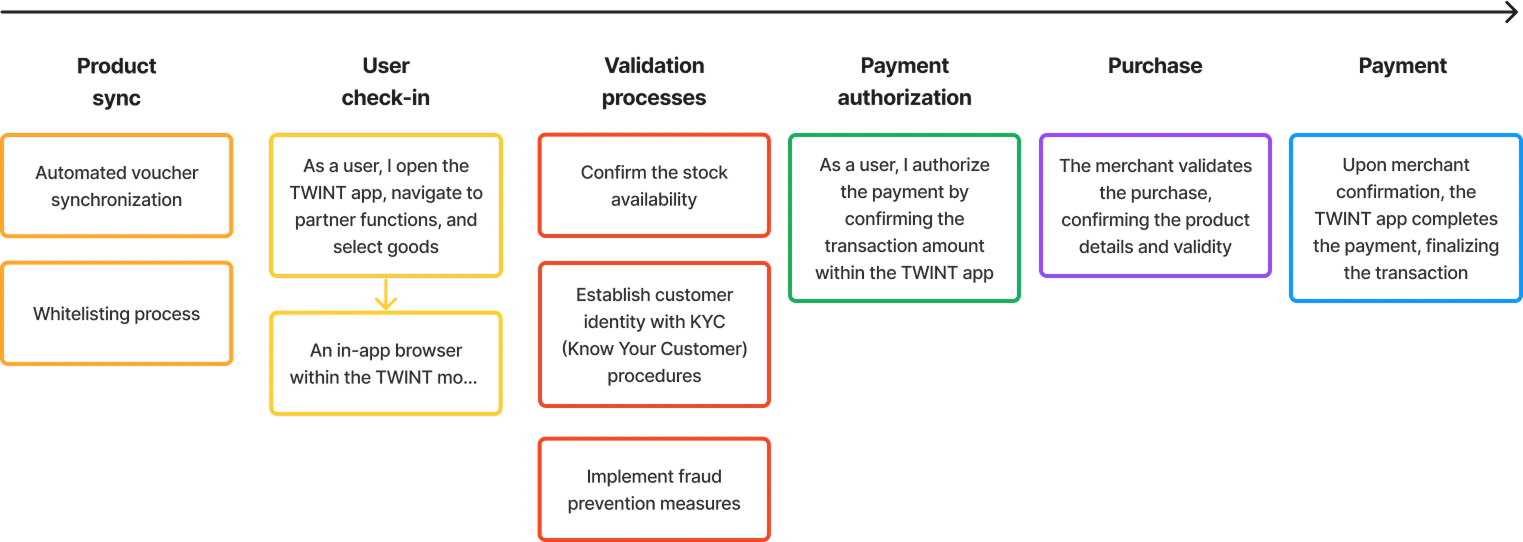
  • TWINT’s business goals and revenue mechanics
  • User behavior across vouchers, merchant deals, and location-based features
  • Compliance and security expectations
  • Ecosystem-level interactions
Without understanding user behaviour, it’s impossible to build a convenient flow.


This alignment phase shaped the entire project. It allowed us to build a digital voucher marketplace and merchant-offer platform in a way that fully met the user's needs.  

Start full-cycle development with alignment as your first priority. It paves the way for every stage that follows.

Challenge 2: Underestimating costs and overpromising results

One of the biggest traps in fintech software development is assuming it will cost and behave like a basic app build. It won’t. Hidden complexity (compliance, security hardening, integrations, audits) means costs can escalate fast, especially if you treat full-cycle development like generic fintech software outsourcing.

What usually goes wrong:

  • Early estimates ignore KYC/AML, PSD2/FINMA needs, security reviews, and data protection work.
  • Teams assume “basic integration” with banks, PSPs, and providers, then discover weeks of edge cases and certification.
  • Founders compare headline outsourcing costs or day rates without understanding the total cost of delivering a production-ready product.

Result: underestimated budget, slipping deadlines, and a roadmap that has to be rewritten halfway through.

Solution: phase your full-cycle fintech development

Instead of one vague “build the product” line item, structure your fintech development project around clear stages with separate expectations and pricing:

  1. Discovery. Validate business model, workflows, and regulatory constraints. Identify risk areas, integrations, and must-have vs nice-to-have features. Output: scope, architecture draft, and realistic ranges for the cost of full-cycle software development.
  2. MVP. Build only what’s needed to validate your core assumptions. This is where a strong fintech software development company keeps you honest about scope.
  3. Audit/hardening. Security reviews, compliance checks, performance tuning, and monitoring setup are often underestimated in fintech software development outsourcing, but are non-negotiable in finance.
  4. Scale. Additional features, optimisations, new integrations, and markets have to be tied to measurable outcomes.

A good fintech development partner will be transparent about pricing models in fintech development outsourcing versus full-cycle engagement, and will help you see not just what it costs per sprint, but what it costs to launch, pass audits, and operate safely in production.

Challenge 3: Designing inside the rules

In fintech, UX = compliance. Every screen, flow, and micro-interaction must respect financial regulations, data-handling rules, risk controls, and user-protection standards. A design that looks great but fails to meet KYC/AML, PSD2/FINMA, PCI-DSS, consent management, disclosure, or auditability requirements is not a design you can ship.

This is where many teams get blindsided. They design like it’s a generic SaaS product to later discover that regulators expect specific steps, explanations, data-visibility constraints, or mandatory user actions.

Solution: Involve fintech experts early in the UX stage

Treat compliance as a design constraint from day one.

At Modeso, we build interfaces with fintech experts involved at the UX stage, not after. That means:

✅Product, design, and compliance sit together when we map the user journey.

✅We decide where to ask for which data, how to explain it to users, and what to log for audits before any high-fidelity UI is created.

✅Designers work with engineers who understand how banks, PSPs, KYC providers, and regulators expect flows to behave.

This way, flows feel simple to users but already meet regulations, so you don’t have to redo half your UX right before launch.

Challenge 4: When “good developers” aren’t enough in fintech

At the development stage, a lot of full-cycle projects fail for a simple reason: the team has solid general skills (Python, React, cloud, etc.) but no real fintech expertise.

In a fintech software development project, that gap is dangerous. Mistakes here lead to rework, delays, and compliance risk.

Solution: Work with a full-cycle team that already knows fintech

Instead of teaching a generalist team “how finance works” on your budget, you bring in a full-cycle fintech development partner that lives and breathes fintech every day and has a portfolio of successful projects in fintech.

At Modeso, we specialize in custom fintech software development for financial services, insurance, asset management, audit/tax firms, and ambitious fintech startups. Our 10+ years of industry experience allow us to build fintech products that are:

  • API-ready. We’ve integrated with everything from banking cores to payment networks, KYC/AML providers, investment data feeds, and reward/loyalty engines.
  • Secure and compliant by design. Encryption, audit trails, multi-layer authentication, and FINMA/PSD2/GDPR-aligned workflows are built in from day on.
  • Production-proven. TWINT’s voucher marketplace, Aumico’s reporting platform, Albin Kistler’s investment research system, and more fintech products all run reliably under regulatory pressure.
  • Scalable. Our products are built to grow and handle evolving financial logic without major refactoring.
Need a partner who knows fintech?
Modeso team has 10+ years of experience in building fintech solutions


Challenge 5: Ignoring integrations until it’s too late

When integration isn’t planned from the start, full-cycle fintech projects often hit roadblocks: data flows break, teams build workarounds, and technical debt piles up. The outcome is duplicate data, manual processes, operational inefficiencies, and scalability limits.

Solution: Plan integration early, as part of the full-cycle design

Here’s the process we use at Modeso and what we can recommend to any fintech development team:

  • Define upfront which systems will be connected
  • Map data flows, triggers, hand-offs, and error paths.
  • Decide on integration architecture: point-to-point, hub-and-spoke, API gateway, iPaaS.
  • Include partner integrations in your estimate and timeline.

In our blog about system integration, we observed that companies treating integration as an afterthought accumulate technical debt, which comes much more costly at the end.

When integration is part of your full-cycle plan, you avoid messy retrofits and deliver a fintech product that scales and integrates seamlessly with the ecosystem.

Challenge 6: Out-staffing can’t replace ownership

In fintech, handing off tasks to an external team without giving them full product responsibility is a major risk. You might get capable engineers, but you don’t get a team that understands the business context, the regulatory pressure, or the long-term technical decisions your product depends on.

And when something goes wrong, like a failed audit, a blocked banking integration, or a scaling incident, you suddenly realize the downside of out-staffing: no one owns the outcome.

You end up switching vendors, re-explaining the domain, managing messy hand-offs, and absorbing responsibility for defects yourself. In a highly regulated industry, that’s too dangerous. Operational risk increases, audits get harder, and continuity breaks down.

Solution: Choose a full-cycle team that owns your product

Our survey of 200 European tech leaders found that 79,2% of teams work with external partners for their development, and many choose a full-cycle team for more stability and confidence.
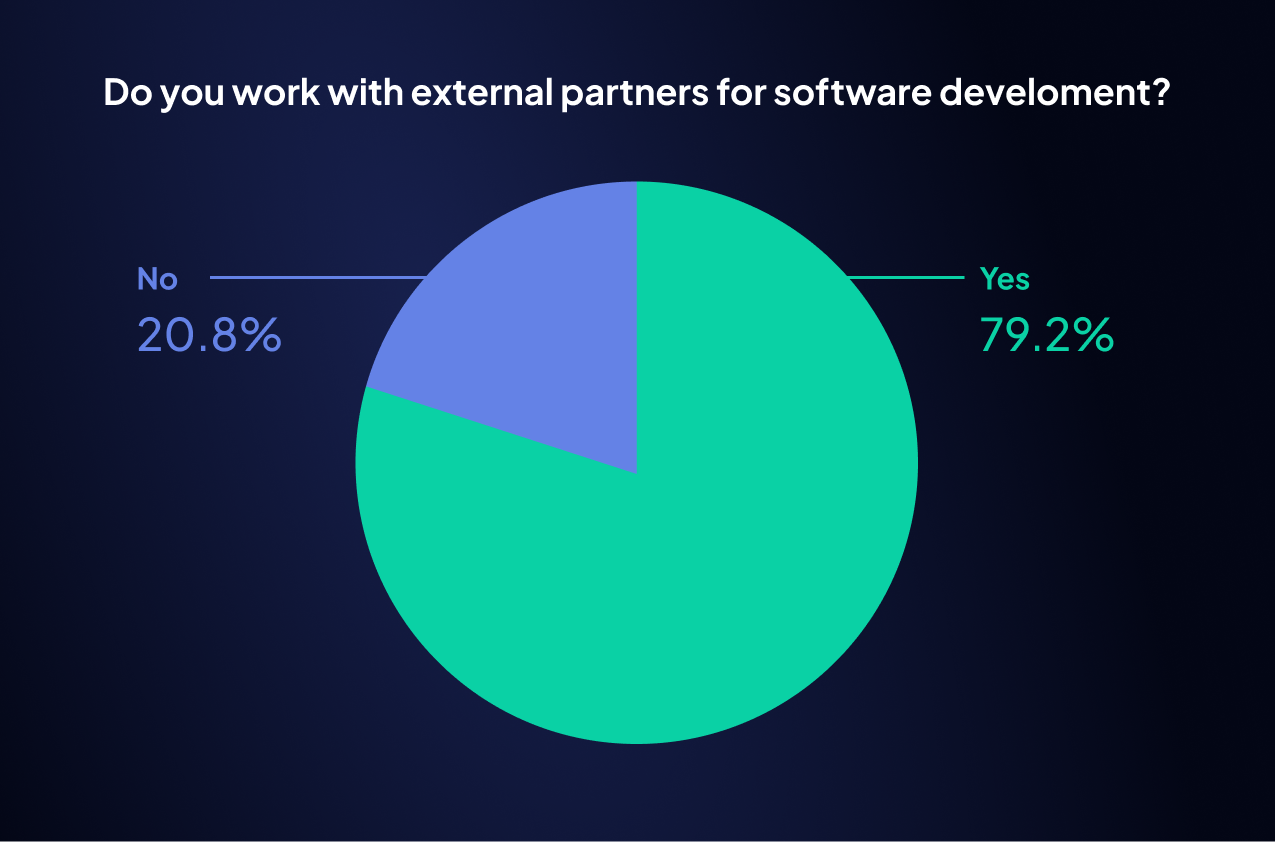
Results of our survey with 200 tech founders.


A full-cycle team takes responsibility end-to-end: product strategy, UX, architecture, integrations, compliance readiness, deployment, monitoring, and continuous improvement. They evolve the product after release rather than disappearing when sprints end.

This is exactly how Modeso works with fintech clients. Swiss-based product ownership combined with our experienced engineering hubs means the same team that designs your solution is the one integrating it, hardening it for audits, and supporting it in production.

Challenge 7: Maintaining security after release

Launching a fintech product isn’t the finish line. In fact, it’s the point where the real security work begins, especially regarding ever-evolving regulations. In Europe, 75% of financial compliance leaders reported a 35% increase in regulatory demands in 2024.

If you don’t maintain tight, continuous security practices after release, you risk:

  • Drifting out of compliance (FINMA, PSD2, GDPR/FADP, PCI-DSS)
  • Missing critical updates in banking or payment integrations
  • Accumulating silent technical debt that weakens security
  • Facing costly incidents or audit failures that stall growth

In fintech, “set it and forget it” simply doesn’t exist.

Solution: Treat post-release security as a full-cycle responsibility

A full-cycle development partner understands that release is only Phase 1. Security, compliance, and operational hygiene must continue as part of the product’s lifecycle.

At Modeso, we stay with our clients after launch because regulated products need ongoing care. We continue to:

  • Monitor systems, update security layers, and apply patches proactively
  • Adapt flows when partners (banks, PSPs, KYC providers) update their requirements
  • Support compliance teams with audit-ready logs and reporting
  • Evolve the product as new legal, security, and operational standards emerge

This long-term vigilance is one of the core strengths of full-cycle development, and one of the biggest weaknesses of one-off outsourcing or outstaffing.

Bottom line: full-cycle won’t magically fix every challenge, but it does help

Full-cycle development isn’t a silver bullet. You’ll still face hard choices about scope, costs, integrations, compliance, security, and long-term ownership.

The difference is that with full-cycle, you’re not fighting those battles alone or in the wrong order.

If you remember anything from this guide, let it be this:

  • Alignment first, or everything gets expensive
  • Costs are better calculated in phases
  • UX should be compliant, too
  • Fintech devs > “good devs”
  • Integration and security are ongoing
  • Ownership matters more in fintech than almost anywhere else

We’ve used these lessons across 90+ fintech and finance products. If you’re planning to build a fintech product, we’ll be glad to help you overcome every challenge. Contact us, and we’ll get back to you in 1-2 business days.

But even if you don’t build with us, use this guide as your checklist. It will save you time, money, and a lot of “we should’ve known this earlier” moments.

FAQ

How is full-cycle development different from fintech software outsourcing?

Traditional outsourcing in fintech gives you extra developers, but not ownership. A full-cycle development team takes responsibility for the entire fintech software development project from discovery to maintenance.

Is full-cycle development more expensive than outsourcing fintech developers?

Not necessarily. While hourly rates for outsourced fintech developers may seem cheaper, the real cost comes from misalignment, rework, failed integrations, and compliance fixes. Full-cycle minimizes these hidden outsourcing costs by planning, building, hardening, and maintaining the product as one continuous process.

When does outsourcing fintech software development make sense?

Fintech outsourcing works best when:

- You already have strong internal product leadership
- The project is narrow and well-defined
- You only need outsourcing experienced fintech developers for execution

For anything involving payments, risk, onboarding, or core financial logic, a dedicated fintech development team using a full-cycle model is safer.

What types of fintech software development products benefit most from a full-cycle approach?

Products involving:

- Digital wallets
- Mobile banking apps
- Payment orchestration
- Investment platforms
- Financial reporting tools
- Risk & compliance systems
- Embedded finance solutions.

Anything with complex integrations, security requirements, or audit paths is better handled by a fintech development partner who owns the full lifecycle.

What are the biggest risks of outsourcing a fintech software development project?

The most common risks include:

- Shallow domain expertise
- Poor alignment with regulatory requirements
- Hidden pricing models in fintech development outsourcing
- Integration failuresInconsistent ownership
- Fragmented post-release support

These risks are amplified in fintech because of strict compliance and data-protection rules.

Should I hire fintech developers in-house instead of outsourcing or going full-cycle?

Building in-house is ideal if you’re developing long-term core IP and have the time and budget for recruitment, training, and retention. But for early-stage or scaling fintechs, a full-cycle fintech development team usually offers a better balance of speed, expertise, and cost.

What’s the advantage of working with a fintech software development company in Switzerland?

Swiss fintech outsourcing offers high-quality engineering, strong compliance culture, and reliable collaboration. It’s ideal for regulated financial products. Local firms understand FINMA, Swiss data standards, banking APIs, and the expectations of Swiss financial institutions.

How do full-cycle teams ensure compliance in fintech app development?

A full-cycle approach integrates compliance at every stage, including UX, architecture, data modeling, integrations, and release. This avoids expensive redesigns and ensures the product aligns with regulations from day one.

Does full-cycle development work for nearshore or offshore fintech app development?

Yes, as long as ownership stays central. Whether your team is nearshore, offshore, or hybrid, the key is having one accountable partner who manages strategy, design, development, compliance, integrations, and long-term operations.

What’s the biggest mistake founders make when they outsource financial software development?

Assuming fintech development works like SaaS. It doesn’t. Fintech is regulated, risk-sensitive, integration-heavy, and audit-driven. Fintech experts, not generalists, should define and build the system from day one.
TABLE OF CONTENT
Weekly newsletter
No spam. Just the latest releases and tips, interesting articles, and exclusive interviews in your inbox every week.
Read about our privacy policy.
Thank you! Your submission has been received!
Oops! Something went wrong while submitting the form.
Header image
Preferences

Privacy is important to us, so you have the option of disabling certain types of storage that may not be necessary for the basic functioning of the website. Blocking categories may impact your experience on the website. More information

Accept all cookies

These items are required to enable basic website functionality.

Always active

These items are used to deliver advertising that is more relevant to you and your interests.

These items allow the website to remember choices you make (such as your user name, language, or the region you are in) and provide enhanced, more personal features.

These items help the website operator understand how its website performs, how visitors interact with the site, and whether there may be technical issues.

Thank you! Your submission has been received!
Oops! Something went wrong while submitting the form.